Posts

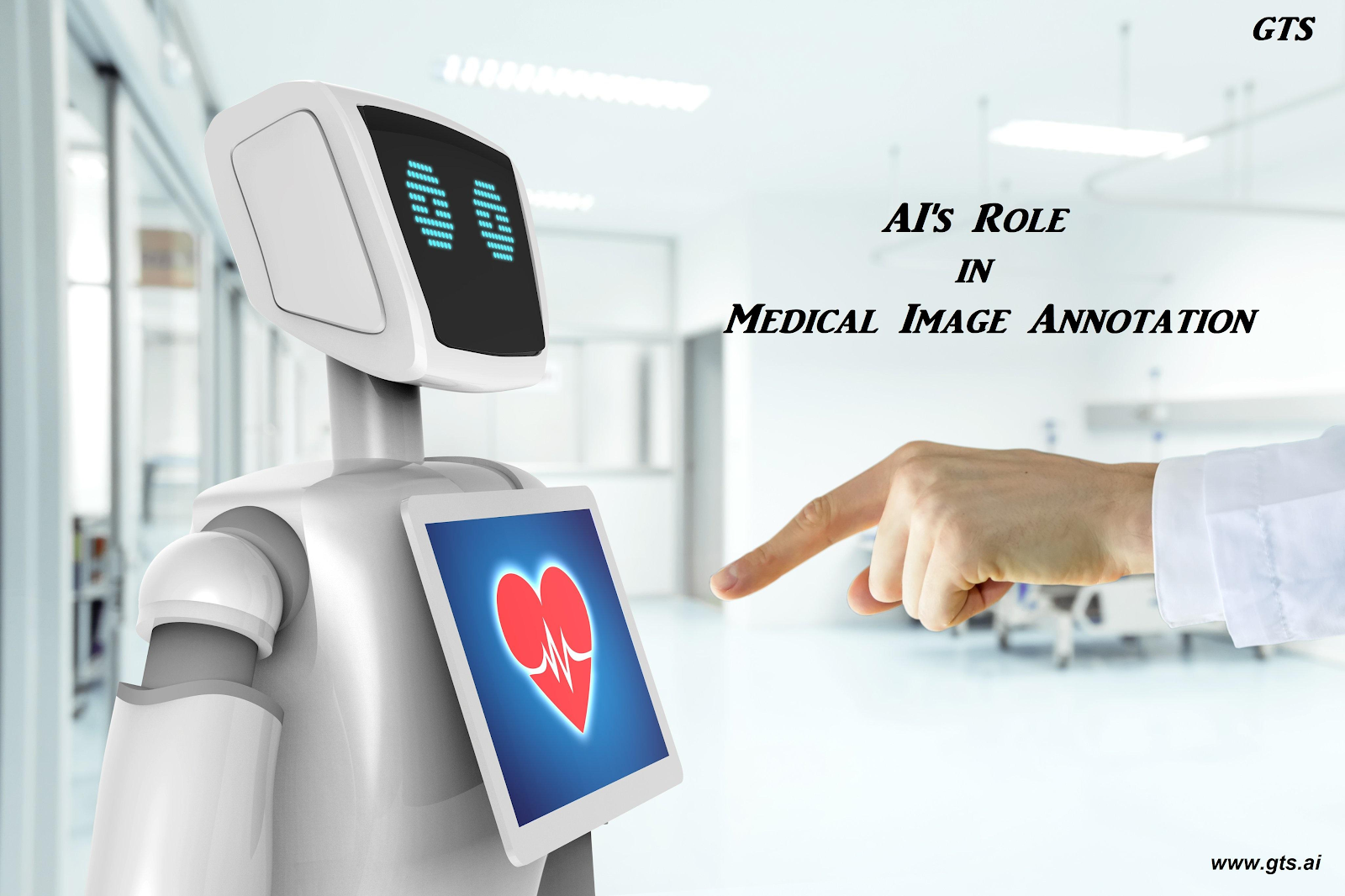
AI's Role in Medical Image Annotation
Image
  Machine learning and artificial intelligence breakthroughs have completely transformed the healthcare business. The global market for AI in healthcare sector was worth around $1 billion in 2016, and it is expected to grow to more than $28 billion by 2025. In 2022, the global AI in the Medical Imaging market is expected to be worth over $980 million. Furthermore, this value is expected to expand at a 26.77 per cent CAGR to $3215 million by 2027. What is Medical Image Annotation? The healthcare business is utilising ML's promise to improve patient care, improve diagnostics, provide more accurate treatment predictions, and discover new drugs. There are, however, a few areas of medical sciences where AI can assist medical professionals in medical imaging. To construct effective AI-based medical imaging models, however, huge volumes of medical imaging must be reliably classified and annotated. Medical image annotation is the process of precisely identifying medical imaging such as MR...

The Crucial Role of Datasets in Boosting the Healthcare Sector

Image
  The Crucial Role of Datasets in Boosting the Healthcare Sector It’s astounding to consider that the volume of data collected in the previous few years alone has surpassed that of all of human history. All of this enormous data must be processed, stored, and evaluated in order for it to be useful. That is the aim of data gathering. The enormous amounts of information, however, have proven difficult for modern technologies to handle, which has resulted in weak performance, lost profits and wasted time. 95% of companies, according to Forbes, struggle with data management and are looking for a workable solution.    There is enormous potential for more precise and comprehensive patient data collecting in the dynamic healthcare sector, which uses the most recent technologies. Technology makes patient data instantly accessible throughout the whole healthcare system, and coordinated efforts within any medical system can increase the precision of medical data collecting. Everyon...

How Artificial Intelligence (AI) in Healthcare Upgraded the medical sector

Image
  The proliferation of new technologies in the information age has upended numerous sectors. The same applies to healthcare. Doctors, hospitals, insurance firms, and industries connected to healthcare have all been touched, oftentimes more positively and significantly than other industries, particularly in the case of automation, machine learning, and artificial intelligence (AI). Approximately 86% of healthcare provider organisations, life science businesses and technology vendors for the healthcare industry use artificial intelligence technologies, according to a 2016 survey by CB insights. These companies will invest an average of $54 million in artificial intelligence initiatives by the year 2020.  Artificial intelligence (AI) has emerged during the past ten years as the most potent transformative force in the healthcare sector. There is numerous potential for healthcare companies to use AI to provide more effective, efficient, and precise interventions to their patients, ...

The Importance of High-Quality Annotated Training Data Sets in the Healthcare

Image
Any crucial machine learning or deep learning project requires annotation, which is of utmost importance. Because accurate labelling and data processing minimise human effort while enhancing accuracy and efficiency, they also help save money and time. Annotations help machine learning algorithms to be accurately taught with supervised learning processes for the right prediction, and they may be further involved in deep learning aspects of AI processes, which require no training and are also known as supervised machine learning. What is Healthcare training data? Machine learning algorithms must be trained, developed, and optimised using healthcare training datasets. The accuracy and effectiveness of the algorithm used to create AI-based applications are substantially impacted by the calibre of the training datasets used. The first step in creating a successful AI solution is having access to accurate and high-quality medical datasets .  Why are Healthcare data important? Finding hig...

Enhancing the quality of medical Data Annotation by Including Humans in the Machine Learning Loop

Image
Abstract : Currently the vast majority of Artificial Intelligence (AI) systems require the involvement of humans for their creation maintenance, tuning, and development. In particular, Machine Learning (ML) systems would be greatly benefited by their expertise or experience. This is why there is a growing interest in what humans do to these systems in order to get the best results for the AI systems as well as the people that are. There are a variety of approaches that have been researched and suggested in the literature, which can be considered under the umbrella term Human-in-the-Loop Machine-Learning. The application of these techniques for the medical informatics system could have a great impact on the diagnosis and prognosis process helping to improve the health care system for Cancer-related illnesses.   Introduction  Most Machine Learning (ML) systems require humans to participate in various stages of the AI pipeline. In light of this need, new kinds of interactions bet...